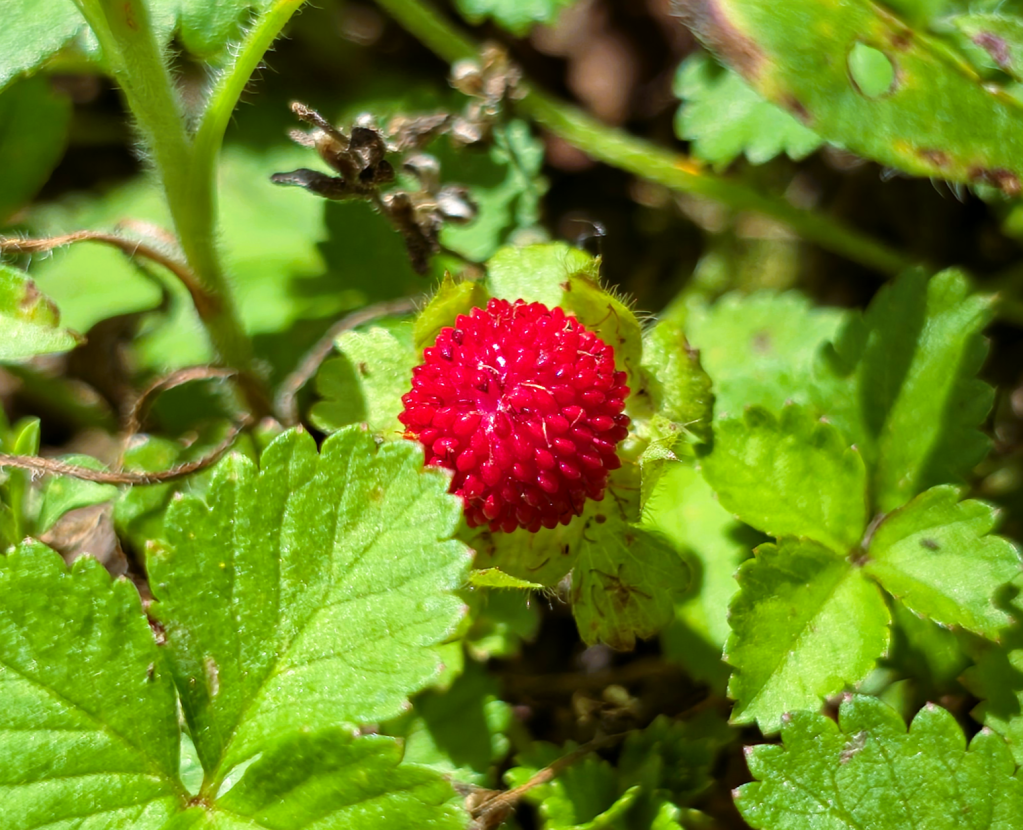
Mock Strawberry: The Deceptive Little Jewel of the Lawn
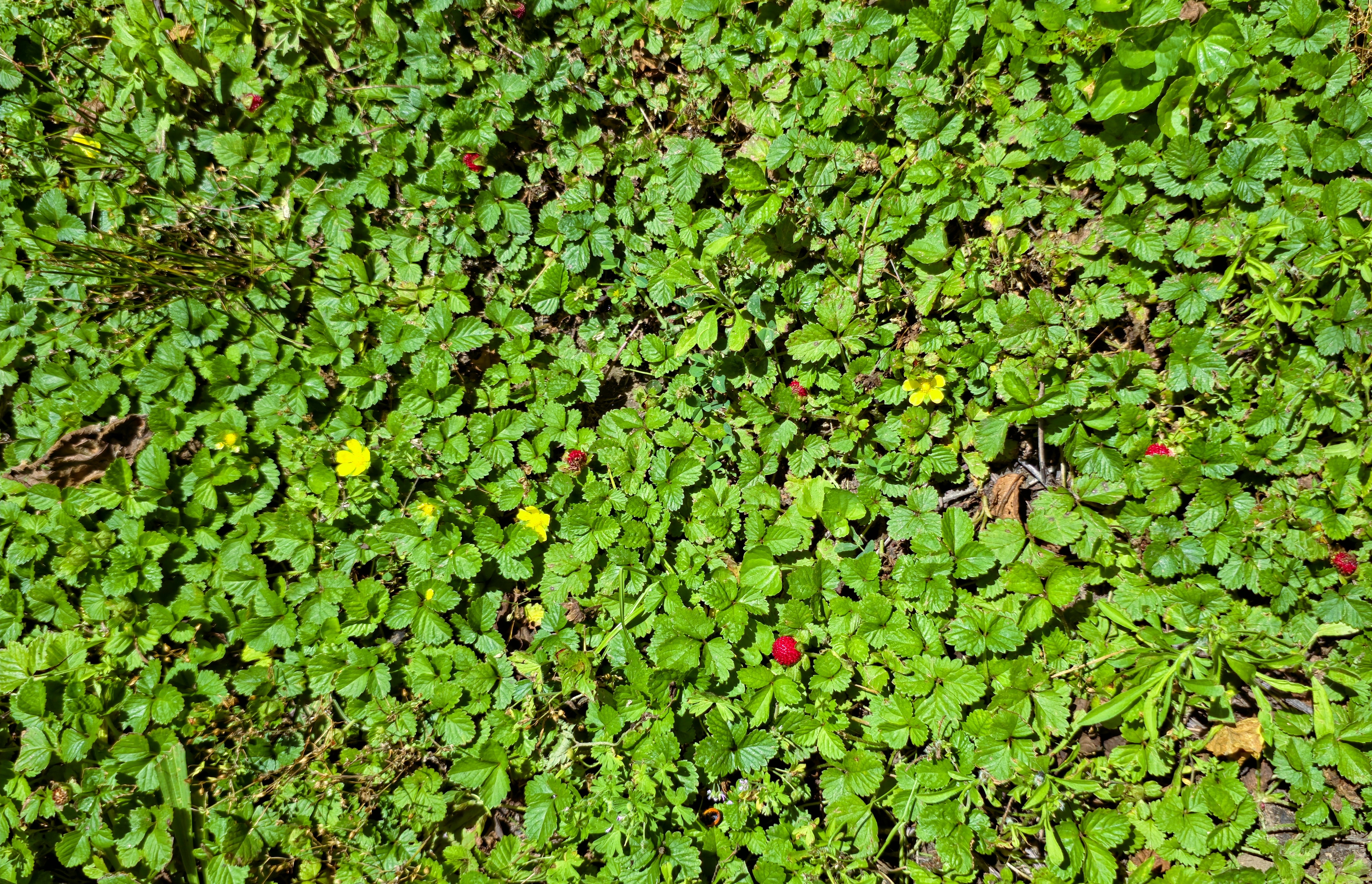
Have you ever been walking through the yard, spotted a bright red strawberry hiding in the grass, popped it in your mouth, and felt completely betrayed by the lack of flavor? If so, you have officially met the mock strawberry! Often hiding in plain sight alongside our native wild strawberries, this little trickster looks like a sweet summer treat but offers a surprisingly watery, bland bite. Today we will explore this fascinating little groundcover, learn how to tell it apart from the real deal, and discover why it still deserves a spot of appreciation in our Ohio lawns.
Mock Strawberry (Potentilla indica)
- Common Name: Mock Strawberry, Indian Strawberry
- Scientific Name: Potentilla indica (formerly Duchesnea indica)
Quick Facts
- Color: Bright crimson red
- Size: About 1 cm in diameter
- Taste: Very bland, watery, and slightly cucumber like
- Edible: Yes, but entirely lacking sweetness
- Found in: Lawns, gardens, woodland edges, and disturbed soils
Visual Identification
- Shape & Size: Small, round, and covered in tiny red seeds that stick out on the very surface of the fruit. They also grow pointing straight up toward the sky!
- Leaves: Divided into three leaflets with toothed edges, looking very similar to true strawberry leaves.
- Flowers: Bright yellow blossoms bloom from mid spring through the summer. This is a dead giveaway, as true wild strawberries have white flowers!
- Stem: Trailing stems that creep along the ground, putting down roots to form dense mats.
Fun Fact: Unlike true strawberries which dangle downward toward the earth, the mock strawberry proudly points its fruit upward, almost like it is showing off!
Habitat and Range
- Location: Very common in lawns, parks, and shaded garden beds.
- Region: Originally native to eastern and southern Asia, but now widely naturalized across North America, including right here in Ohio.
Ecological Role
- Wildlife Value: Birds, small mammals, and some reptiles will happily snack on the berries.
- Groundcover: Because it spreads so easily, it acts as a living mulch that helps prevent soil erosion in patchy areas.
Did you know? In traditional Eastern medicine, the leaves and fruit of the mock strawberry have been used for centuries as a cooling remedy for skin conditions and inflammation.
Foraging Tips
- Season: Berries ripen continuously from late spring all the way through early fall.
- Tips: They are incredibly easy to harvest! Just pinch them right off the upward facing stem. They are best picked when bright red, though the flavor will not change much no matter how ripe they get.
How to Enjoy
- Recipes: Since they lack sweetness, they are not great for jams or pies. However, their bright red color makes them a beautiful, surprising addition to summer salads! You can also drop a handful into ice water for a very subtle, refreshing cucumber note.
- Crafting: The bright red juice can actually be used as a natural, temporary stain or dye for nature crafts.
Try This! Next time you find a patch, pick a few and toss them into a pitcher of cold lemon water. They will not add much sweetness, but they look absolutely beautiful floating in the glass!
Safety Notes
- Lookalikes: True wild strawberries (Fragaria virginiana). You can easily tell them apart by the flowers (yellow for mock, white for true) and the seeds (sticking out for mock, slightly sunken in for true).
- Safety: They are completely safe and non toxic for humans and pets.
Fun Activity!
- Try This! Go on a “strawberry hunt” in your local park or even your own backyard. See if you can find both the mock strawberry and the true wild strawberry growing near each other, and practice identifying them by their flowers and the way the berry sits on the stem!

 Berry Wild Ohio
Leave a comment